Article
The Myth of Invincibility: What Leaders Can Learn from CEO Gordon Lownds’ Fall and Rise
December 1, 2025
A candid discussion with Gordon Lownds — former CEO and author of Cracking Up. Part 1 of 2. Click here to watch the full interview or a number of curated clips.
When I sat down with Gordon Lownds — the co-founder of Sleep Country Canada and Listen Up Canada — I already knew his story was powerful. I’d just finished his book Cracking Up, and it doesn’t hold back. But hearing him walk through the rise, his spiral into addiction, and the road back — in his own words — brought a whole new level of honesty, depth, and raw humanity to the conversation.
And that’s exactly why this conversation matters for all of us.
Because behind every high-performing executive, there’s a human being who believes or tries to believe, I can handle anything. And that belief helps us to succeed and can also get us into trouble.
“I thought I was invincible.”
That’s the line that stuck with me.
Gordon had built companies, made millions, and outworked everyone around him. He was confident — actually, supremely confident, as he told me. Until he met his match when he took “one hit” of crack to prove a point to someone else… and found himself swept into a two-year spiral that almost killed him.
As he put it:
- He had the compulsion to use.
- He lost control over that compulsion.
- And he ignored the consequences.
Those are the “three C’s” of addiction — and most leaders don’t realize how close they are to that line. Not because they’re weak. Because they’re wired for intensity.
I’ve said for years: many CEOs & Executives have addictive personalities. I sure do. Many of the people I have coached do. It’s part of what makes us great at building, pushing, and obsessing over goals. But it’s also what makes us vulnerable.
Addiction doesn’t look how you think.
We all have a picture in our heads — the back alley, the needle, the stereotype.
But in reality?
It’s the dentist Gordon met in an alley who had once run a successful practice.
It’s the CEO drinking 14 cocktails a day in his beautiful Vancouver home.
It’s the executive who “only” works 100 hours a week to avoid reality.
It’s the many of us getting high on adrenaline, validation, or chaos.
Everyone suffers. Everyone is healing from something. And high-achievers are often the last to admit it.
The bravest moment in Gordon’s story wasn’t getting clean — it was accepting help.
After two years of using, Gordon took a leave of absence hoping he could quietly get himself together. Instead, he spiraled deeper. The turning point came when he finally called his business partner, Steve Gunn, and said the words he’d resisted for years:
“I’ve got a serious cocaine problem.”
And instead of anger, what he got back was compassion.
That moment — someone reaching out with a lifeboat and him being willing to take it — saved his life.
We all need to remember this: you cannot outsmart, outperform, or out-strategize addiction or mental health challenges. You can only work through them, by letting another human or humans in to help.
The real work? Becoming self-aware.
When he finally made it to recovery, Gordon confronted the things he’d pushed down for decades — from a broken relationship with his father to underlying mental health challenges such as bipolar tendencies, narcissism, PTSD, depression. Many founder-types share versions of these traits (there’s great research on this). The difference is he finally had someone who wouldn’t let him hide.
His doctor became the person who “called him on his BS,” as Gordon put it, and that accountability changed everything.
My biggest takeaway for leaders like us.
We all want to believe we’re bulletproof. We’re not. And that’s a good thing.
The real strength isn’t in being invincible.
It’s in being honest.
Being connected.
Being self-aware.
Being human.
If Gordon’s story reminds us of anything, it’s this:
Addiction can happen to anyone. Recovery is possible for anyone. But neither happen alone.
Watch my full interview with Gordon below or skip to any of the identified chapters.
To get the full story in Gordon’s own words, I highly recommend picking up his book Cracking Up — it’s a powerful, unfiltered read.
Additional Resources:
- Blog — How a Highly Successful CEO Can Spiral from Peak Performance to Personal Crisis
- Video — Mental Health Webinar: Building Sustainable Resilience
- Video — A Close Call with Mental Health: Interview with Michael Wendland
- Blog — Resilience and Relationships
- Video — Interview with David Greer: Facing a Brutal Fact
- Blog — An Insightful Take on Trauma and Stress
- The Mental Health Continuum to assess how you and others around you are doing
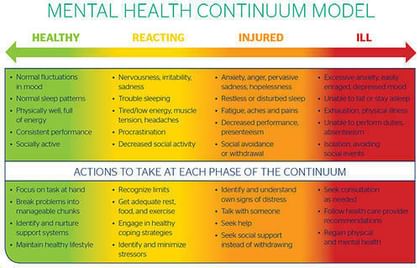
If you or someone you know is struggling, please reach out. Free, confidential help is available 24⁄7, 365 days a year, no matter where you are. Trained crisis responders will listen without judgment and give you a safe place to talk.
In Canada and the U.S.: call 9−8−8 for immediate mental health or suicide-prevention support.
And if you or someone else is in immediate danger, go to your nearest emergency room — right now. Your safety comes first.
About Lawrence & Co.
Lawrence & Co. is a growth strategy and leadership advisory firm that helps mid-market companies achieve lasting, reliable growth. Our Growth Management System turns 30 years of experience into practical steps that drive clarity, alignment, and performance—so leaders can grow faster, with less friction, and greater confidence.
About Kevin Lawrence
Kevin Lawrence has spent three decades helping companies scale from tens of millions to hundreds of millions in revenue. He works side-by-side with CEOs and leadership teams across North America, the Middle East, Asia, Australia, and Europe, bringing real-world insights from hands-on experience. Kevin is the author of Your Oxygen Mask First, a book of 17 habits to help high-performing leaders grow sustainably while protecting their mental health and resilience. He also contributed to Scaling Up (Rockefeller Habits 2.0). Based in Vancouver, he leads Lawrence & Co, a boutique firm of growth advisors.