Article
When Our Drive Breaks Us: Lessons from Sleep Country CEO Gordon Lownds
January 12, 2026
A candid discussion with Gordon Lownds — former CEO and author of Cracking Up. Part 2 of 2. (See Part 1 here)
Entrepreneurs love origin stories. And Gordon Lownds has a great one: a teenage carny who learned human psychology on the Midway at the CNE, went on to co-found Sleep Country Canada, and built multiple successful companies.
But what struck me most in our conversation wasn’t the rise or the fall — it was the self-awareness he gained after everything went sideways and he almost died. Most leaders are great at execution. Far fewer are great at understanding themselves.
The carny lesson every CEO should learn
The carnival didn’t just give Gordon a job; it gave him an early education in human behaviour. He learned to read people instantly — what they wanted, feared, or reacted to. That skill became foundational in his business career.
It also contributed to the vulnerability that later pulled him off track. The same instincts that fuel entrepreneurs can expose them to the wrong people, environments, and escapes.
The traits that build companies can also break the people building them
Gordon described himself as fiercely independent, highly driven, confident, allergic to authority, and unwilling to show weakness. That’s a résumé for a high-performing founder — and a recipe for trouble when things start to slip.
You don’t need drugs for this to matter. The “substance” might be work, adrenaline, control, perfectionism, alcohol, or validation. The patterns are the same: the strengths that power growth can quietly become blind spots.
The turning point wasn’t rehab — it was connection
Even at his lowest point, Gordon tried to fix everything himself. It wasn’t until he picked up the phone and told his business partner the truth that things finally shifted.
He expected judgment. He got compassion. And that opened the door to real recovery.
Leaders excel at solving problems. We sometimes struggle to admit when we are the problem. But Gordon’s story reinforces this truth:
You can’t build a company alone.
You can’t climb out of a crisis alone.
The real transformation came from emotional intelligence
What actually changed Gordon wasn’t willpower — it was learning how he worked on the inside. Recovery forced him to confront his motivations, reactions, fears, and blind spots. That’s leadership development at its deepest level, and most leaders avoid it until life pushes them into it.
Long-term resilience came from two simple habits
When I asked Gordon what keeps him grounded today, he didn’t offer routines or systems. What he shared was much more personal — and directly from his own experience:
1. Gratitude — remembering how bad things once were
Gordon said one of the biggest changes in his life has been staying grounded in gratitude. As he put it:
“Always remembering where I was at the worst part of my life… and being grateful for what I have today.”
It’s simple, but it’s powerful — and it keeps him connected to the perspective that helped pull him out in the first place.
2. Saying yes when someone reaches out for help
Gordon also made it clear that he never refuses someone who asks him for help. In his words:
“When people ask me for help, never say no.”
For him, being useful to others isn’t a strategy — it’s a commitment. And it comes directly from what he learned in recovery: connection saves lives, and showing up for others keeps him grounded in a meaningful way.
The leadership lesson we can’t ignore
Gordon’s story is more than a cautionary tale; it’s a reminder that:
- Drive isn’t enough
- Intelligence isn’t enough
- Success definitely isn’t enough
In the long game of leadership, self-awareness becomes the real competitive advantage — understanding what fuels you, what can derail you, and who you can be truly honest with.
Gordon faced that reckoning. Many do. Some don’t. But his story shows there’s always a way back, if you’re willing to reach for the hand that’s already there.
Below is my full interview with Gordon or skip to any of the identified clips.
For the full story read Gordon ’s book, Cracking Up.
Additional Resources:
- Blog — How a Highly Successful CEO Can Spiral from Peak Performance to Personal Crisis
- Video — Mental Health Webinar: Building Sustainable Resilience
- Video — A Close Call with Mental Health: Interview with Michael Wendland
- Blog — Resilience and Relationships
- Video — Interview with David Greer: Facing a Brutal Fact
- Blog — An Insightful Take on Trauma and Stress
- The Mental Health Continuum to assess how you and others around you are doing
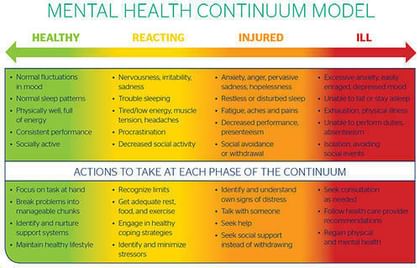
If you or someone you know is struggling, please reach out. Free, confidential help is available 24⁄7, 365 days a year, no matter where you are. Trained crisis responders will listen without judgment and give you a safe place to talk.
In Canada and the U.S.: call 9−8−8 for immediate mental health or suicide-prevention support.
And if you or someone else is in immediate danger, go to your nearest emergency room — right now. Your safety comes first.
About Lawrence & Co.
Lawrence & Co. is a growth strategy and leadership advisory firm that helps mid-market companies achieve lasting, reliable growth. Our Growth Management System turns 30 years of experience into practical steps that drive clarity, alignment, and performance—so leaders can grow faster, with less friction, and greater confidence.
About Kevin Lawrence
Kevin Lawrence has spent three decades helping companies scale from tens of millions to hundreds of millions in revenue. He works side-by-side with CEOs and leadership teams across North America, the Middle East, Asia, Australia, and Europe, bringing real-world insights from hands-on experience. Kevin is the author of Your Oxygen Mask First, a book of 17 habits to help high-performing leaders grow sustainably while protecting their mental health and resilience. He also contributed to Scaling Up (Rockefeller Habits 2.0). Based in Vancouver, he leads Lawrence & Co, a boutique firm of growth advisors.